Monday, 8 June 2020
THE SOLAR SYSTEM
Listen and read the text on pages 10 and 11 about the Solar System.
Now, play this guessing game with the information you already know.
Finally, try this interactive worksheet about SOLAR SYSTEM VOCABULARY
Easy peasy lemon squeezy!
Etiquetas:
solar system,
year 3
Friday, 5 June 2020
LOOK AFTER YOUR HEALTH - PAGES 26 AND 27
Listen, read and answer the questions about how to look after yourself.
Now, try this interactive worksheet about TIPS FOR STAYING HEALTHY.
Have a nice weekend!!!
Wednesday, 3 June 2020
A HEALTHY DIET - PAGES 24 AND 25
Watch the videos (remember to read anl listen at the same time), answer the questions and do the interactive worksheet. Have fun!
Now try this worksheet!
Easy peasy! Wasn't it?
Etiquetas:
food groups,
healthy diet,
healthy eating,
healthy food,
year 3
NUTRIENTS VERSUS FOOD GROUPS
Read this if you want to clarify the difference between nutrients and food groups.
Essential nutrients are compounds that the body can’t make or can’t make in sufficient quantity. These nutrients must come from food, and they’re vital for disease prevention, growth, and good health. There ares six groups of essential nutrients: protein, carbohydrates, fats, vitamins, minerals and water. (Sometimes we say 5 groups plus water).
We put food that have the same main nutrients together, making food groups. We are going to see five basic groups, that contain lots of different foods: Carbohydrates and fibre, Fruit and vegetables, Proteins and iron, Dairy products and Fats.
We can represent them in different ways (food pyramid, food plate) to show how many of each we should eat. You can find more food groups if the classification is more precise.
Essential nutrients are compounds that the body can’t make or can’t make in sufficient quantity. These nutrients must come from food, and they’re vital for disease prevention, growth, and good health. There ares six groups of essential nutrients: protein, carbohydrates, fats, vitamins, minerals and water. (Sometimes we say 5 groups plus water).
We put food that have the same main nutrients together, making food groups. We are going to see five basic groups, that contain lots of different foods: Carbohydrates and fibre, Fruit and vegetables, Proteins and iron, Dairy products and Fats.
We can represent them in different ways (food pyramid, food plate) to show how many of each we should eat. You can find more food groups if the classification is more precise.
Etiquetas:
food groups,
nutrient,
year 3
Tuesday, 2 June 2020
Monday, 1 June 2020
A TRIP TO THE SUPERMARKET - PAGE 20
This week we are going to do a quick revision about what a healthy diet is and how important it is to give our body all the nutrients we need in the right amount. We'll start with this simple listening and I would like you to answer question two as a comment below.
You can also write, if you remember them, the different types of nutrients we studied in the school. How many can you name?
Etiquetas:
healthy food,
year 3
Friday, 29 May 2020
SOME OPTICAL ILLUSIONS
I know, it’s not exactly an experiment, but illusions are still cool.
Illusions are images that use your EYES to confuse your BRAIN.
Take a look at this grid:
Did you notice the small grayish dots between the black boxes. They are not part of the drawing – they were put there by your brain! Scientists call this “visual vibration.” Basically it means that when you see patterns of black and white, your eye sometimes confuses the two and blends them into patterns of gray that you see here. You are seeing something that is not really there!
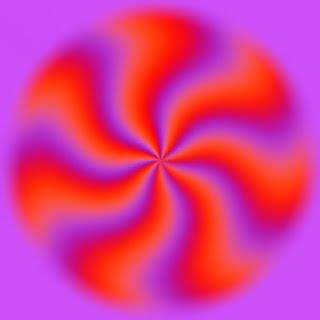
Whoa! Is that image spinning? Nope, not even a little bit. In fact, if you look away, it will seem to stop spinning. It’s all in your brain…. The repeated patterns and lines trick your brain into thinking that there is movement as it tries to make sense of the image. Pretty cool, huh?
This elephant is missing a leg…or is it? The artist confuses hisviewer by changing they way our brain is used to seeing things.
It seems the more you look at the elephant, the more confusing it gets.
Want to see the gears move?Look at the dot and then move your head towards the screen and away from it.
This uses visual vibrations to create a cool effect. Try moving your head close to, and then away from the screen. The fuzzy dots appear to move.
This simple line drawing is titled, “Mother, Father, and daughter” (Fisher, 1968) because it contains the faces of all three people in the title.How many faces can you find?
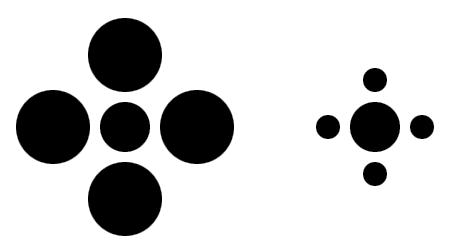
Look at the dots in the center. Which one is bigger? Like many similar illusions, the dots are the same size…really! It can be hard to tell because your eye uses the other dots to make a comparison.
Check out the spiral…except it is not a spiral, just circles.
Don’t believe me? Use your finger to follow the fake spiral.
The tilt of the boxes fools your brain into believing it is a spiral.
Don’t believe me? Use your finger to follow the fake spiral.
The tilt of the boxes fools your brain into believing it is a spiral.
Hey, this is weird. Click on the image to make it bigger. It looks as though it’s moving, but it’s not. The shapes confuse the eye (really the brain) into believing that they are moving.
Etiquetas:
optical illusions,
sight,
year 3
Subscribe to:
Posts (Atom)